Use Poker Assistant
Study a solution
Read the grid, the action mix and the EV of a spot without guessing what the colours mean.
You can read any spot's strategy and say why one hand mixes and another is pure.
- A solution loaded in Study, as in Load a solution.

Before you start
This lesson assumes a solution is already loaded, the way Load a solution leaves it. Every example below uses the free heads-up set, so nothing here needs a pack.
Move through the hand
- Look at the seat row across the top of Study. It lists every action taken this hand, one card per street, with the seat to act highlighted.
- Click an available action on that card to take it. The row grows by one card, the street advances if the action closes it, and a new decision loads.
- Deal a flop once preflop betting closes: pick three cards, and the app solves that exact board on the device. Slots for the turn and the river open the same way as the hand continues.
- Click an earlier card in the row to jump back to that point. Everything after it is discarded, so a different line from there is one click away.
Read the grid and the ladder
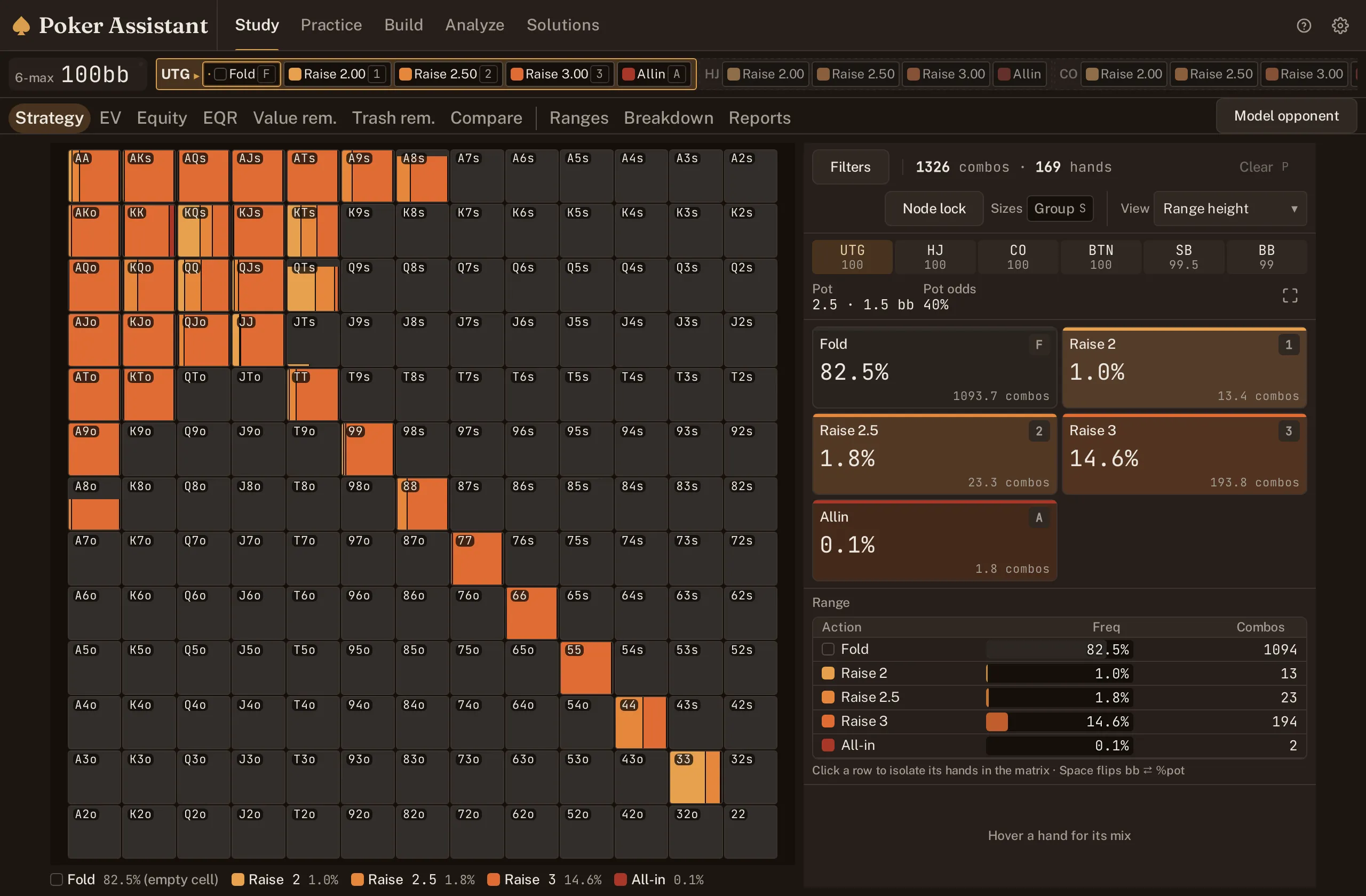
- Read the ladder first: each button is one action, and the percentage on it is how often the solver takes that action from this spot.
- Read the grid next: each of its 169 cells is a starting hand, filled to match the ladder colour of the action the solver favours for it, and split when it favours more than one.
Change the lens
- Find the metric control beside the grid, set to Strategy by default. Every cell colour marks an action there, sized by frequency, matching the ladder.
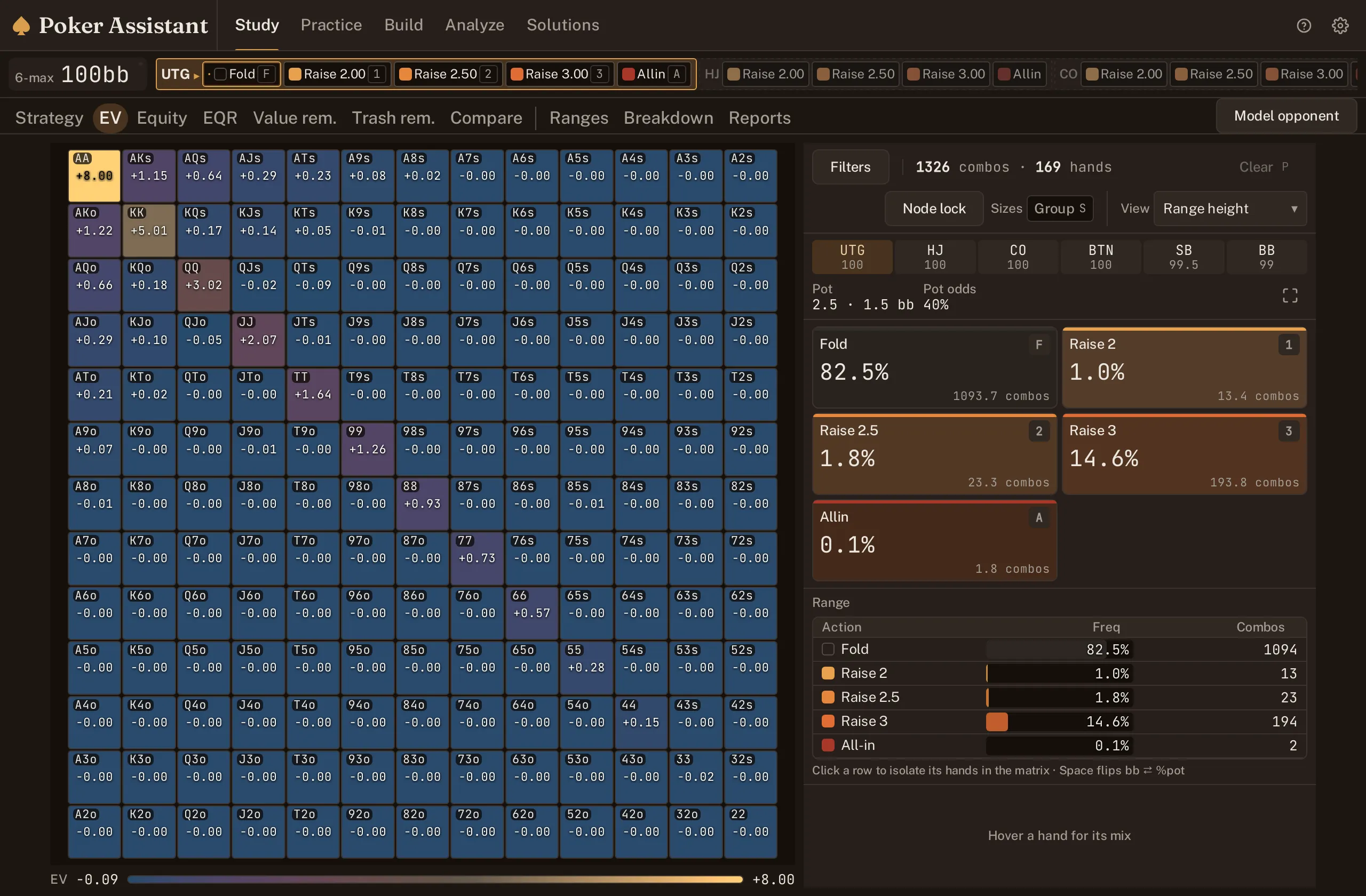
- Switch it to EV and the same grid recolours by expected value in big blinds, cell by cell, from -0.09 on the weakest hand to +8.00 on the strongest.
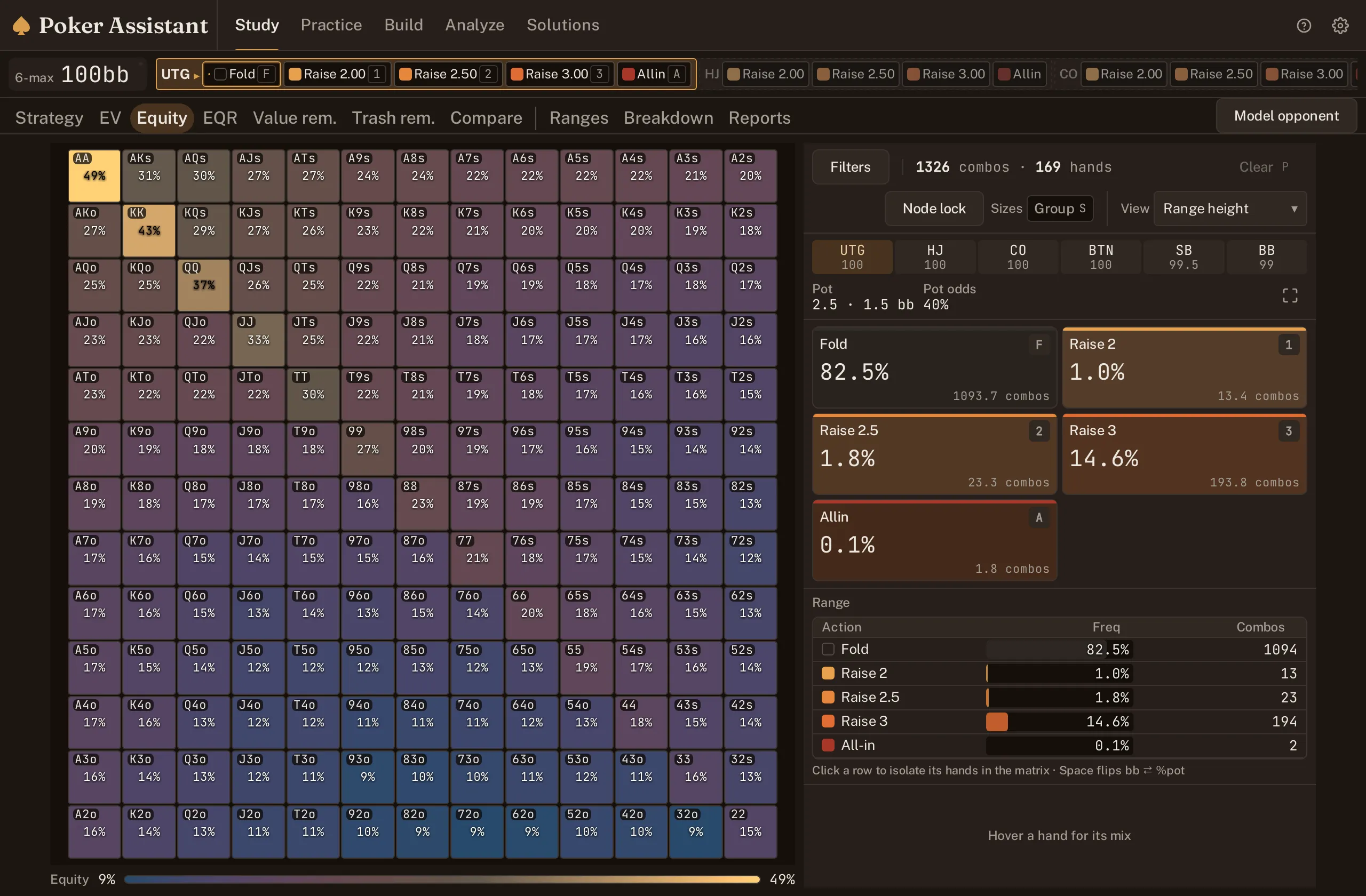
- Switch it to Equity and the grid recolours a third time, by raw chance of winning the pot at showdown, which is a different number from EV.
Strategy
EV
Equity
Look at one hand
- Click a single cell, say A9o, in the grid. The side panel breaks its action mix out by exact percentage instead of the colour band the ladder shows for the whole range.

See the whole board
- Open the aggregate report from the Reports tab. It averages this spot’s flop strategy across a sample of the 1,755 strategically distinct flops, weighted by how often each board is actually dealt.
- Pick one flop from the chart to see its own numbers next to the sample average: bet frequency and EV for that board alone.

Read the result
A9o raising 99.4% of the time is close enough to pure to play as a raise on sight. A hand painted in two colours is a different kind of answer: split a cell 55/45 between two actions and the solver is telling you both actions win at that ratio.
Deal a street this pack has not already solved and the row shows “Solving…” or “Resolving on demand…” while the engine works that exact board. There is no separate button for it: dealing the card is what starts the solve, and it carries the same way from the flop through the turn to the river.